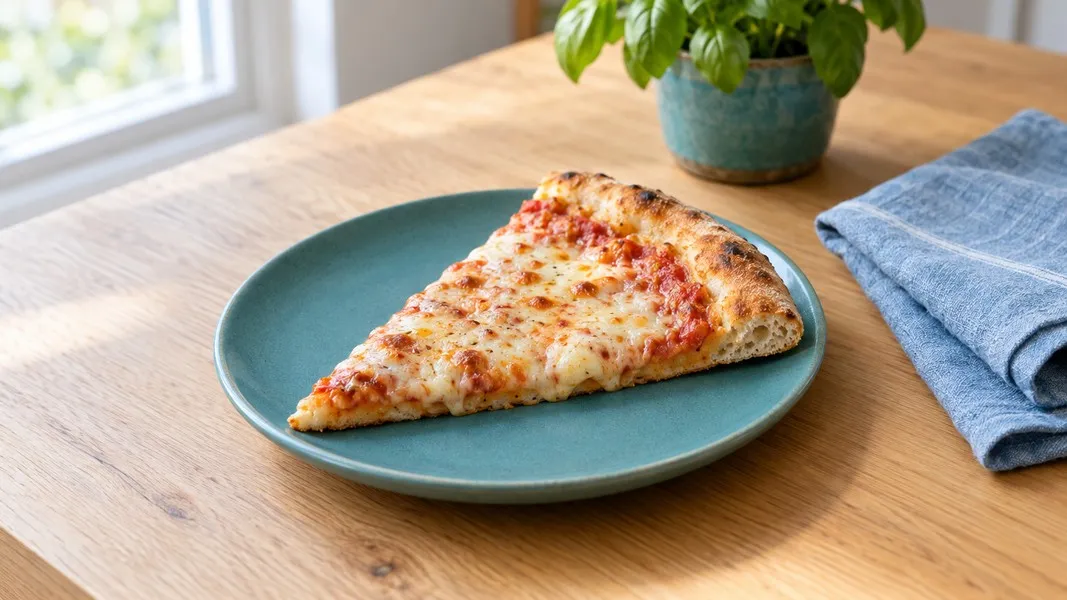
A slice of cheese pizza from a 14-inch chain pizza cut into eight has about 285 calories, according to USDA FoodData Central. The same slice with pepperoni is about 313, a thin crust slice about 230 and a thick crust slice about 312. So how many calories in a pizza slice depends on three things you can see: how big the pizza is, how thick the crust is and what sits on top.
That is why the number from a quick search rarely fits the slice on your plate. A slice from an 18-inch New York pie and a slice from a 12-inch medium share a name and very little else. This guide gives the USDA figures for the common chain styles, then shows how to adjust them for size, cut and toppings with simple arithmetic.
How Many Calories in a Pizza Slice, by Crust and Topping
The USDA keeps laboratory figures for 14-inch chain pizzas, each with a standard slice weight, one eighth of the pie. Multiplying the calories per 100 grams by the slice weight gives the calories per slice.
| Pizza, 14-inch, cut in 8 | Slice | Per 100 g | Per slice |
|---|---|---|---|
| Cheese, thin crust | 76 g | 302 kcal | about 230 |
| Cheese, regular crust | 107 g | 266 kcal | about 285 |
| Cheese, thick crust | 115 g | 271 kcal | about 312 |
| Pepperoni, regular crust | 111 g | 282 kcal | about 313 |
| Pepperoni, thick crust | 118 g | 287 kcal | about 339 |
Two branded entries in the same database land close by. A Pizza Hut 14-inch cheese pan slice is listed at 112 grams and 276 kcal per 100 grams, about 309 calories. A Papa John's 14-inch pepperoni original crust slice is 123 grams at 275 kcal per 100 grams, about 338 calories.
For a regular chain slice, 285 calories for cheese and about 315 for pepperoni are sound starting points. Everything below is about moving away from those two numbers when your slice is different.
Thin Crust Pizza: More Calories per Gram, Fewer per Slice
Thin crust looks like the obvious low-calorie choice, and per slice it is. Per gram it is the opposite. The USDA thin crust cheese pizza carries 302 kcal per 100 grams against 266 for regular crust, and almost 14 grams of fat per 100 grams against under 10.
The reason is proportion. A thin base holds less bread and less water, so the cheese and oil make up a larger share of each bite. What saves thin crust is weight: its slice is 76 grams against 107 for regular crust, so the slice still comes out around 55 calories lighter.
This matters when you log by grams rather than by slice. If you put a thin crust slice on a kitchen scale and use the regular crust figure per 100 grams, you undercount it. Match the entry to the crust before you match the grams.
Thick, Pan and Stuffed Crust Slices
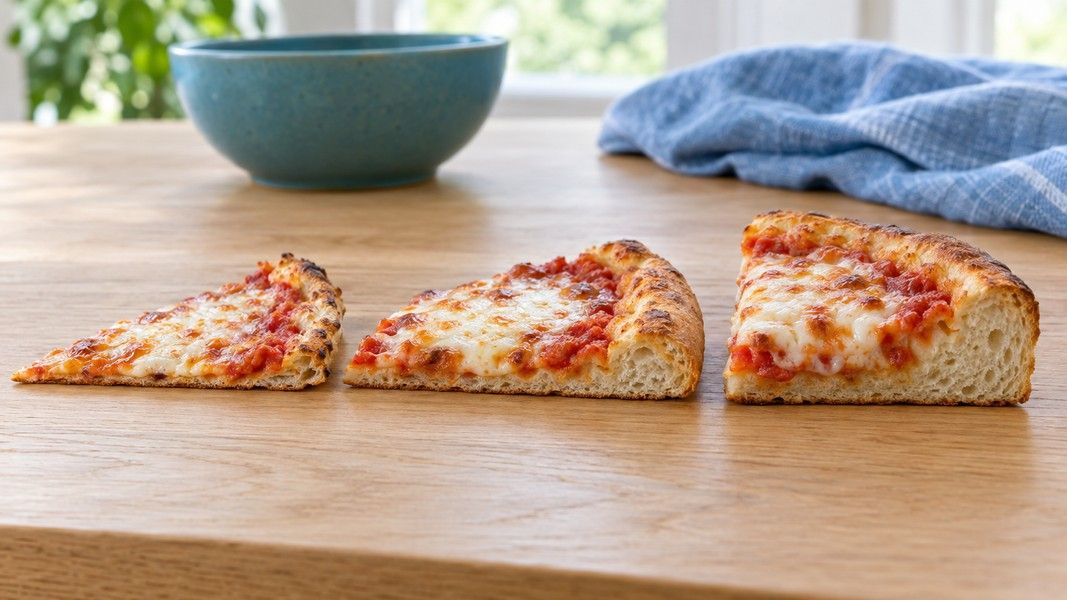
Thick crust adds bread more than it adds richness. The USDA thick crust cheese slice weighs 115 grams at 271 kcal per 100 grams, so it lands near 312 calories, about 27 more than regular crust. The pepperoni version follows the same pattern, from about 313 to about 339.
Pan crust behaves like thick crust because the dough is baked in oil. The branded Pizza Hut pan slice above, at about 309 calories, sits right beside the generic thick crust figure. Stuffed crust adds a ring of cheese to the edge, which none of the generic entries above cover, so look for the chain's own chart rather than a generic number.
Pizza Slice Calories by Size: 10, 12, 14, 16 and 18 Inches
Pizza size is where the biggest swings hide. The area of a circle grows with the square of its diameter, so a slice from a 16-inch pizza is not two inches bigger than a 14-inch slice; it holds about 31 percent more pizza.
The table scales the USDA 14-inch figures by area. It assumes the same crust thickness, the same toppings and eight slices per pie, so treat it as an estimate rather than a lab value.
| Pizza size, cut in 8 | Slice area | Cheese slice | Pepperoni slice |
|---|---|---|---|
| 10-inch | 9.8 sq in | about 145 | about 160 |
| 12-inch | 14.1 sq in | about 209 | about 230 |
| 14-inch | 19.2 sq in | about 285 | about 313 |
| 16-inch | 25.1 sq in | about 372 | about 409 |
| 18-inch | 31.8 sq in | about 471 | about 517 |
The worked example is short. A 12-inch slice has (12 ÷ 14)², or about 0.73, of the area of a 14-inch slice, and 285 × 0.73 is about 209 calories. An 18-inch slice has about 1.65 times the area, which takes the same cheese slice past 470 calories.
A large New York style slice can hold well over 400 calories without looking unusual. Its crust is thin, but its sheer area makes up for that.
How Many Slices the Pizza Is Cut Into
The slice count changes the answer as much as the diameter does. Most chain charts assume eight slices for a large pizza, yet not every pizza is cut that way. The Domino's nutrition guide for August 2026 lists its hand tossed large per eighth of the pizza, but its New York style pizzas per sixth.
Cut the same 14-inch cheese pizza into six instead of eight and each slice grows by a third, from about 285 to about 380 calories. The whole pizza did not change; the slice did. When you count slices, count the cut too: a party pizza cut into squares or a pie cut into twelve thin wedges needs its own arithmetic.
The simplest fix is to start from the whole pizza. The USDA regular crust cheese pizza weighs 853 grams in total, about 2,270 calories, so any slice is that number divided by how many pieces the pizza was cut into.
What Toppings Add to a Slice
The USDA numbers show what pepperoni costs: about 28 calories more per regular slice than plain cheese, and about 27 more on thick crust. Pepperoni also raises fat, from about 9.7 to 11.9 grams per 100 grams on regular crust.
Vegetable toppings work differently. Vegetables add weight to a slice but very little energy: the Domino's guide lists a 25 gram portion of mushrooms and a 14 gram portion of onions at about 5 calories each. Meat toppings stack up faster, and the same guide puts its multi-topping specialty pizzas at about 330 to 370 calories per eighth of a large.
Three additions are easy to miss because you barely see them:
- Extra cheese, which spreads under the other toppings and changes the slice more than its look suggests.
- Oil, brushed on the crust, pooled under pan dough or drizzled on at the table.
- Dips, which come in a separate cup; Domino's lists its garlic dipping cup at 250 calories and its ranch at 160.
Why a Photo of Pizza Misses Calories
Pizza is hard to estimate by eye, and it is just as hard for software. Fat is the part a camera sees least: cheese melts into the base, oil soaks into the crust, and a thick slice looks much like a regular one from above.
Research backs this up. In a study presented in July 2026, researchers ran photos of 102 carefully prepared meals through four photo-based apps, MyFitnessPal, Lose It!, Cal AI and Appediet. All four underestimated calories by about 250 to 345 per meal on average, and fat by about 30 grams.
That is the honest frame for any photo estimate, including Primo Scale. Its Calorie Estimator identifies the food in one photo and estimates calories and macros from USDA reference data, with its reasoning shown beside the result. A photo estimate is a quick first draft; the chain's own nutrition chart, when there is one, is the better source. Our guide to photo calorie estimates explains where they help and where they fall short.
Estimating the Calories in Your Own Slice
Put the pieces together and most slices can be estimated in under a minute. Work through the causes in order, from the one that moves the number most:
- Find the chain. If the pizza comes from a chain, its nutrition guide beats any generic figure, because it lists your exact size, crust and cut.
- Pick the crust. Start from about 230 for thin, 285 for regular and 312 for thick, all per eighth of a 14-inch cheese pizza.
- Adjust for size. Multiply by the area ratio from the size table, about 0.73 for a 12-inch pie and about 1.31 for a 16-inch one.
- Adjust for the cut. If the pizza was cut into six, multiply by 8 ÷ 6; if into ten, by 8 ÷ 10.
- Add the toppings. Add about 28 for pepperoni, more for stacked meats or extra cheese, and count any dip separately.
If you want a second opinion, a photo in Primo Scale gives you an estimate with its reasoning, which you can compare with your own arithmetic. For a full restaurant plate with sides and drinks, our step-by-step on restaurant meal calories covers the rest of the table.
Pizza Slice Calories in Short
A standard slice of 14-inch chain cheese pizza is about 285 calories, and pepperoni adds about 28 more. Thin crust is denser per gram but lighter per slice, at about 230, while thick and pan crusts sit above 300.
Size matters more than crust. Because area grows with the square of the diameter, a 16-inch slice holds about 31 percent more pizza than a 14-inch one, and an 18-inch New York slice can pass 470 calories even as plain cheese. The number of slices in the pie changes the answer just as much.
Fat is the part every estimate tends to miss, whether it comes from your eye or an app. Start from the chain's chart where one exists, adjust a generic figure for size, cut and toppings where it does not, and treat any photo estimate as a first draft.