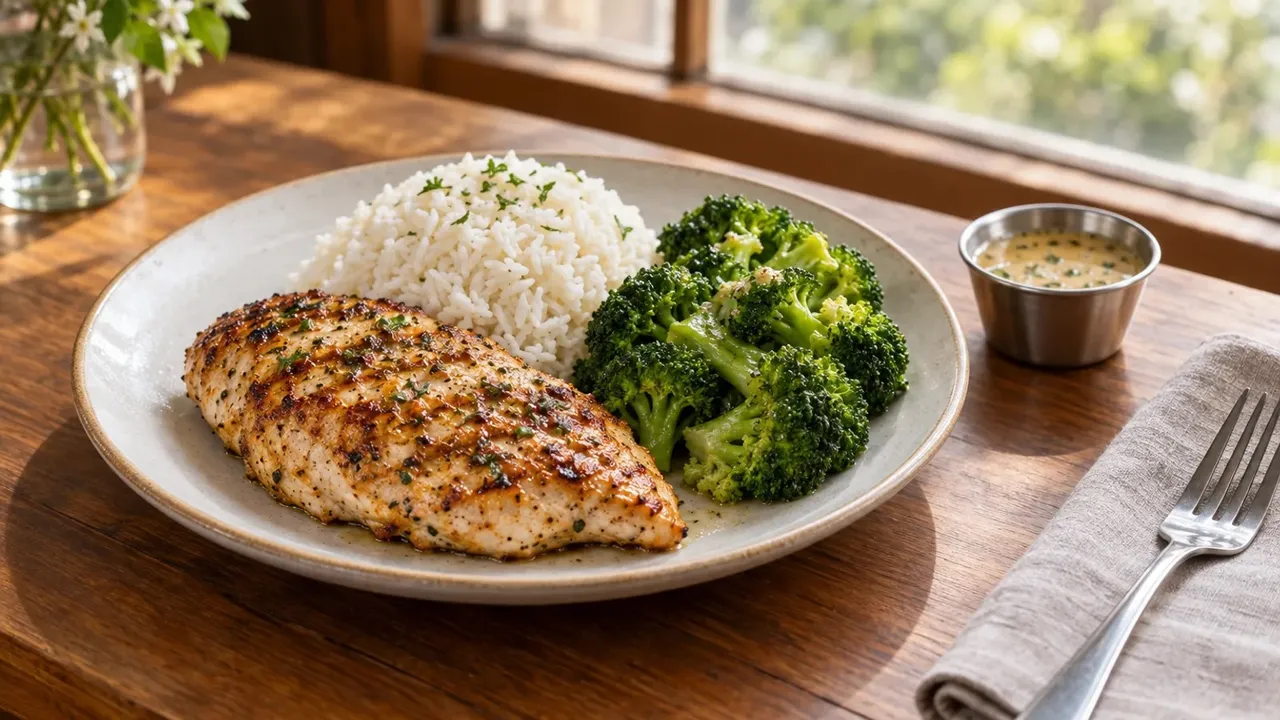
Split the plate into its parts, estimate how much of each there is, look up each part's calories, and then add the cooking fat you cannot see. A plate of grilled chicken, rice and broccoli comes to about 510 calories on paper, and about 730 if the kitchen used a tablespoon of oil and a tablespoon of butter.
This guide walks through those four steps with USDA figures, shows where the hidden calories usually are, and says when a posted calorie count can do the work for you.
When the menu already tells you
In the US, a restaurant that is part of a chain with 20 or more locations, doing business under the same name and selling substantially the same menu, has to post calories for its standard menu items. That is the FDA menu labeling rule, in force since May 2018.
Those restaurants also have to give you written nutrition information on request: total fat, saturated fat, trans fat, cholesterol, sodium, carbohydrates, sugars, fiber and protein, as well as calories. If you are at a large chain, ask for it before you estimate anything.
When it does not
Independent and small-chain restaurants are not covered, and they make up about half of US restaurants. A 2016 study measured the most frequently ordered meals from those restaurants in San Francisco, Boston and Little Rock in a laboratory. They averaged 1,205 calories a meal, give or take 465, about the same as equivalent meals from large chains. American, Italian and Chinese meals averaged 1,495, and 92 percent of all the meals had more energy than a typical person needs for one meal.
So a plate with no label is often bigger than it looks. The four steps below give you a figure to put in a diary.
Step 1: split the plate into its parts
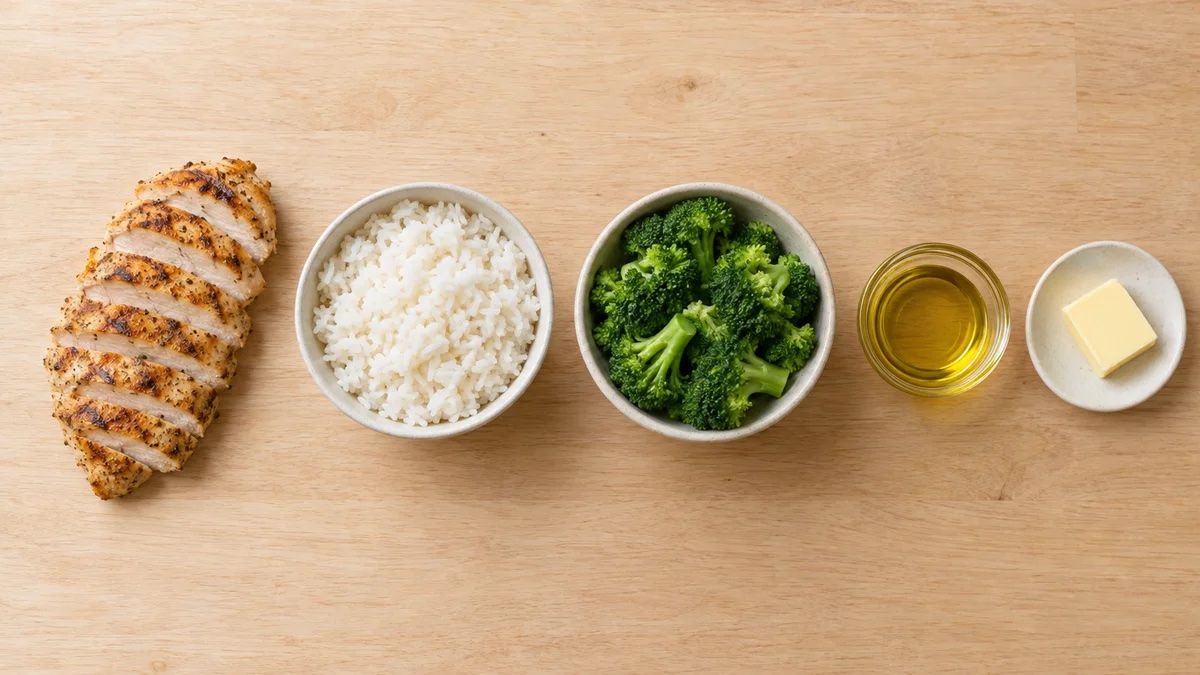
Name each food separately: the protein, the starch, the vegetables, the sauce, and anything on the side. A dish that arrives as one thing, a pasta or a curry, still has parts: the pasta, the sauce, the cheese, the oil.
Step 2: estimate each portion
A portion is what is on your plate. A serving is the amount on a Nutrition Facts label. The NIDDK draws the same line, and it matters here, because a restaurant portion can be several servings.
Estimate each part in grams or in cups, whichever you find easier to picture. If you have cooked the same food at home and know roughly what a cup of rice or a chicken breast looks like, that memory is your best reference.
Step 3: look up each part
USDA FoodData Central lists calories per 100 grams for plain foods. For the plate in the photo at the top:
| Food | Portion | Calories |
|---|---|---|
| Grilled chicken breast | 150 g | about 250 |
| White rice, cooked | 1 cup, 158 g | about 205 |
| Broccoli, boiled | 1 cup, 156 g | about 55 |
| Subtotal | about 510 |
Cooked chicken breast without skin comes to 165 calories per 100 grams, cooked white rice to 130 and boiled broccoli to 35. The ramekin of sauce in the photo would be a fourth part.
Step 4: add the fat you cannot see
Oil in the pan, butter on the vegetables and dressing on a salad add calories without changing much of what you see. In the USDA's figures, a tablespoon of olive oil is about 119 calories and a tablespoon of butter about 102.
Add one of each to the plate above and it goes from about 510 to about 730 calories. Roughly 30 percent of the total is fat you cannot see on the plate. You will not know how much the kitchen used, so if the food looks glossy or the plate has a pool of oil or butter, count at least a tablespoon. Sauces on the side are easier: estimate the ramekin like any other part.
Even posted calories are a guide
A 2011 study in JAMA measured 269 foods from 42 restaurants that list their calories. On average the stated figures held up, but individual foods varied: about one in five had at least 100 calories more than stated, and foods with lower stated calories tended to contain more than stated. A posted number is a good starting point, not a guarantee.
Estimating from a photo
Primo Scale's Calorie Estimator does steps 1 to 3 from one photo of the plate. It identifies each food, estimates its portion, using LiDAR depth on iPhones that have it, and matches it against USDA reference data, then shows the calories and macros for each food and for the whole meal, with its reasoning beside them.
Like any estimate from a photo, it only sees what is on the surface. Oil, butter and sugar cooked into the food are the part it, and you, can miss. The figure is an AI estimate, not a measurement, so treat it as approximate.
When an estimate is not enough
For a diary or a rough daily total, an estimate does the job. For a medical diet set gram by gram, ask the restaurant for its written nutrition information where it has to provide it, use a calibrated scale for the portions you prepare at home, and follow the advice of your doctor or dietitian.
Quick answers
How do I estimate calories in a restaurant meal? Split the plate into its parts, estimate each portion, look each up in USDA FoodData Central, and add a tablespoon of oil or butter for anything that looks glossy.
Do restaurants have to show calories? In the US, chains with 20 or more locations have to post calories for standard menu items and give written nutrition information on request.
How many calories are in a typical restaurant meal? A 2016 study measured frequently ordered meals from independent and small-chain restaurants at about 1,205 calories on average.
Where do hidden calories come from? Mostly cooking fat: a tablespoon of olive oil adds about 119 calories and a tablespoon of butter about 102.
Can an app estimate the calories in a photo? It can give an estimate from what it sees on the plate. Fat cooked into the food is the part it can miss.