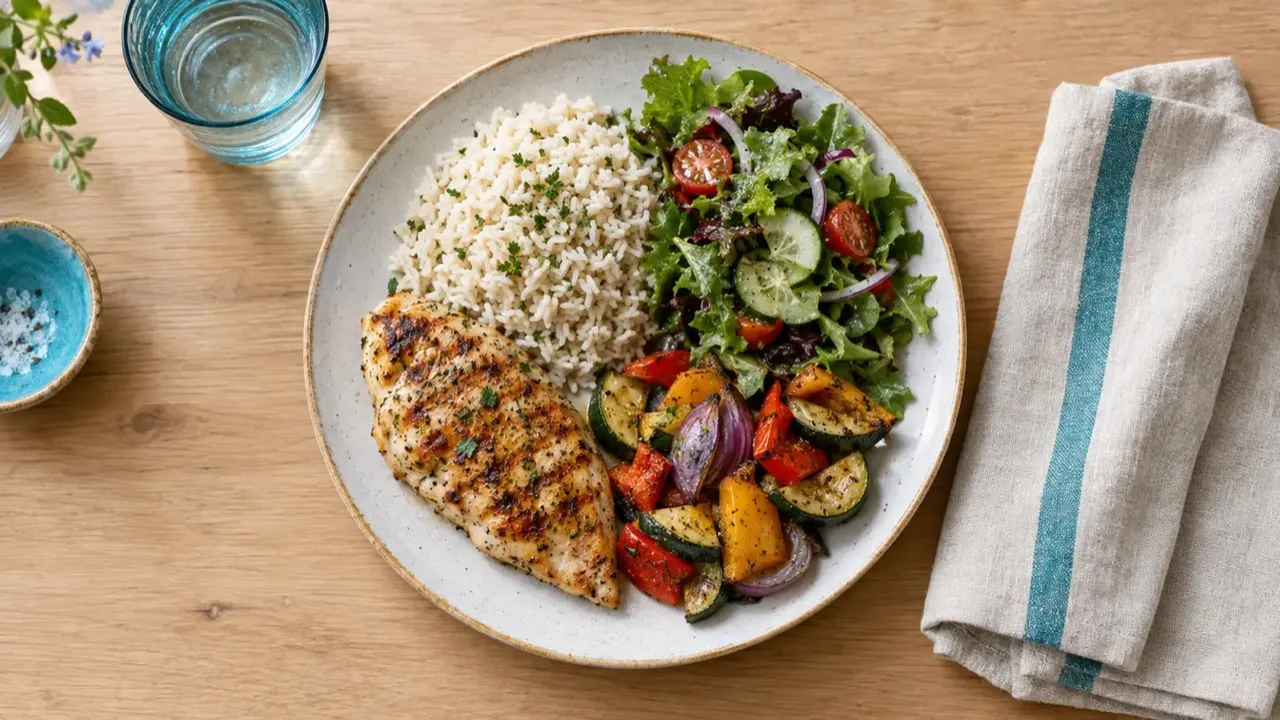
A photo calorie estimate does three things in a row: it recognises each food on the plate, estimates how much of each there is, and multiplies that amount by the food's known energy per gram. The first step is usually the easy one. The second, the portion, is where most of the uncertainty lives, and it is why any calorie figure from a photo is approximate.
This guide walks through each step, shows where the error comes from, and gives a few habits that make any estimate, from an app or from your own eye, closer to the truth.
Step 1: what is on the plate
The estimate starts by naming the foods: grilled chicken, white rice, roasted carrots, a side salad. Modern image models are good at this for common dishes, and they can often tell cooked rice from couscous or a chicken breast from a pork chop.
They struggle with what the camera cannot see. A sauce mixed into rice, butter melted into vegetables, oil soaked into a fried crust: none of these show up clearly in a photo, and all of them carry calories.
Step 2: how much of each
Next, the estimate judges the portion. From a single image that means reading size from the picture, comparing the food against the plate, a fork or the table, and, on phones with a depth sensor, using depth to judge height and volume.
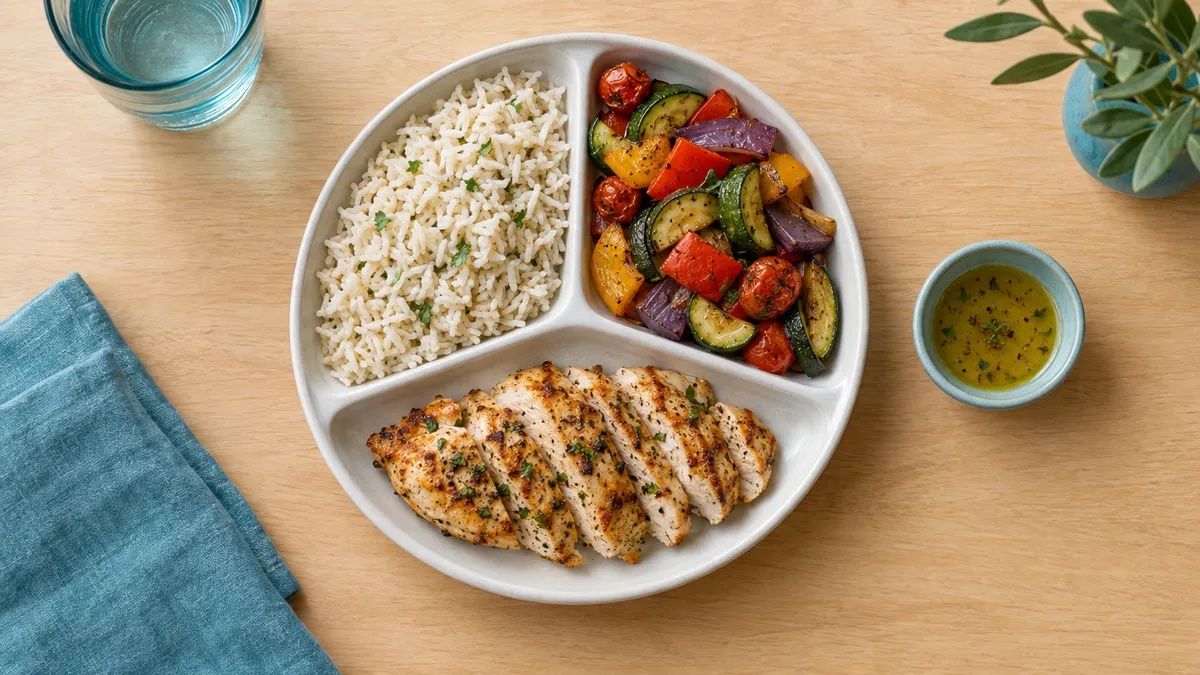
Portion is the hard part because volume hides in depth. A mound of rice that looks the same from above can be twice as tall in one photo as in another. A separated plate, like the one above, is easier to estimate than a mixed bowl, for the same reason.
Step 3: from grams to calories
Once the grams are estimated, the arithmetic is simple. Each food has a known energy density, and reference databases such as USDA FoodData Central list it. A few figures from it show how much density varies:
| Food | Typical portion | About |
|---|---|---|
| Cooked white rice | 1 cup (158 g) | 205 kcal |
| Cooked spaghetti | 1 cup (about 140 g) | 220 kcal |
| White bread | 1 slice (25 g) | 67 kcal |
| Olive oil | 1 tablespoon (13.5 g) | 119 kcal |
The last line is the one to remember. A single tablespoon of oil, which may be invisible in a photo, carries more than half the calories of a full cup of rice. Fats are where photo estimates, and people, most often fall short.
Where an estimate can miss
- Hidden fat. Dressing, butter, cooking oil and creamy sauces add calories the camera cannot see.
- Stacked or mixed food. A burrito, a casserole or a layered bowl hides what is inside.
- Unusual portions. A restaurant serving can be far larger than the reference portion a database assumes.
- Similar-looking foods. Regular and diet dressing, whole and skimmed milk, look the same.
How to take a photo that helps
Shoot from slightly above, not straight down. A 45 degree angle shows height as well as area.
Keep something of known size in frame. A standard plate, a fork or a can gives the estimate a scale to work from.
Separate what you can. If the sauce comes on the side, photograph it on the side.
Add what the camera missed. If you cooked with two tablespoons of oil, add about 240 calories yourself.
What Primo Scale does
Primo Scale's Calorie Estimator follows these three steps from one photo. It identifies the foods, estimates each portion, using LiDAR depth on iPhones that have it, and matches them against USDA reference data, then shows the calories and macros for each food and for the whole meal, with its reasoning beside them.
It does not weigh the food or use phone sensors to measure its weight. The figure is an AI estimate from what the camera sees and what is known about those foods. For a medical diet set gram by gram, use a calibrated scale for the portions and follow the advice of your doctor or dietitian.
Quick answers
How close do photo calorie estimates get? They are estimates, closest for simple, separate foods with no hidden fat. Treat the figure as give or take.
Why does the same meal get different estimates? Angle, light and what is in frame change how large the portion looks.
What is the biggest source of error? Portion size, and fat the camera cannot see.