The calories in pasta depend first on whether you count it dry or cooked. Plain enriched pasta has about 371 calories per 100 g dry and about 158 calories per 100 g once boiled, according to USDA FoodData Central. A loosely filled cup of cooked spaghetti weighs about 124 g and carries about 196 calories, and the 2 oz dry serving printed on most boxes is about 211.
If you have ever logged a bowl of spaghetti and got a number that felt far too high or suspiciously low, the pasta was probably fine and the entry was not. Pasta is listed dry and cooked under near-identical names, its cups weigh different amounts by shape, and the sauce can carry nearly as much as the noodles. This guide gives you the figures for each case and a way to log pasta from what you actually cooked.
How Many Calories in Pasta, Dry and Cooked
Cooked pasta has well under half the calories of the same weight of dry pasta, because most of the extra weight is water. The table below uses USDA reference figures for plain pasta cooked without salt or oil.
| Pasta type | Per 100 g dry | Per 100 g cooked |
|---|---|---|
| Enriched wheat pasta (spaghetti, penne, macaroni) | 371 kcal | 158 kcal |
| Whole-wheat pasta | 352 kcal | 149 kcal |
| Egg noodles | 384 kcal | 138 kcal |
The dry column sits in a narrow band. Dry pasta is mostly starch with a little protein, so one dry pasta is close to another, and whole wheat saves you only about 5 percent. The real difference with whole-wheat pasta is fibre rather than energy.
The cooked column is the one most people need, because the pasta on a plate is almost always cooked. Egg noodles look like the lightest choice per 100 g cooked, which matters less than it seems, as the cup figures below show.
The 2 oz serving on the box
Most US pasta labels give one serving as 2 oz of dry pasta, which is about 57 g. At 371 calories per 100 g, that serving carries about 211 calories.
How much cooked pasta that serving becomes depends on how long it boils. The USDA Food Buying Guide records that 1 lb of dry enriched spaghetti yields 2.37 lb of al dente pasta after 8 minutes of boiling. On that ratio, a 57 g dry serving comes out at about 135 g cooked, a little more than a loosely filled cup of spaghetti.
Calories in 1 Cup of Pasta, by Shape
A cup measures volume, and pasta shapes fill a cup very differently. Tubes and bows trap air, while long strands lie closer together. USDA lists a separate cooked cup weight for each common shape, and the calories follow the weight.
| Cooked pasta, 1 cup | Weight | Calories |
|---|---|---|
| Spaghetti, not packed | 124 g | 196 kcal |
| Spaghetti, packed | 151 g | 239 kcal |
| Elbow macaroni, not packed | 120 g | 190 kcal |
| Elbow macaroni, packed | 132 g | 209 kcal |
| Lasagne | 116 g | 183 kcal |
| Penne, rotini or farfalle | 107 g | 169 kcal |
| Shells | 105 g | 166 kcal |
| Whole-wheat spaghetti | 117 g | 174 kcal |
| Egg noodles | 160 g | 221 kcal |
The enriched rows all use the same 158 calories per 100 g, so the spread comes entirely from how much pasta fits in the cup. A packed cup of spaghetti carries about 43 calories more than a loose one, with nothing different about the pasta itself.
Why egg noodles turn the ranking around
Egg noodles had the fewest calories per 100 g cooked, yet a cup of them carries the most. USDA's cooked cup of egg noodles weighs 160 g against 124 g for loose spaghetti, which pushes a cup to about 221 calories in the USDA reference tables.
When you compare pasta types, compare them per 100 g, or you are partly comparing how tightly each shape packs a cup. The same tables put a cup of dry spaghetti at 91 g and 338 calories, which is why a cup of dry pasta and a cup of cooked pasta should never share an entry.
Why Your Pasta Calories Look Wrong
Pasta errors are rarely careless. They come from the way pasta is sold, cooked and listed, and four causes account for most of them.
Dry and cooked entries get swapped
Food databases list pasta both ways, often a line apart. Put 200 g of cooked spaghetti on the plate, log it against a dry entry, and the diary records about 742 calories for a plate that carried about 316.
The reverse mistake undercounts. Measure out 100 g of dry pasta, cook it, eat all of it and log 100 g against the cooked entry, and you record 158 calories for pasta that carried about 371.
Cooking time changes the weight, not the energy
Water carries no calories, so the calories in the pot are the calories that went in dry. What changes with cooking is how much water the pasta takes up, and that shifts the weight of every portion.
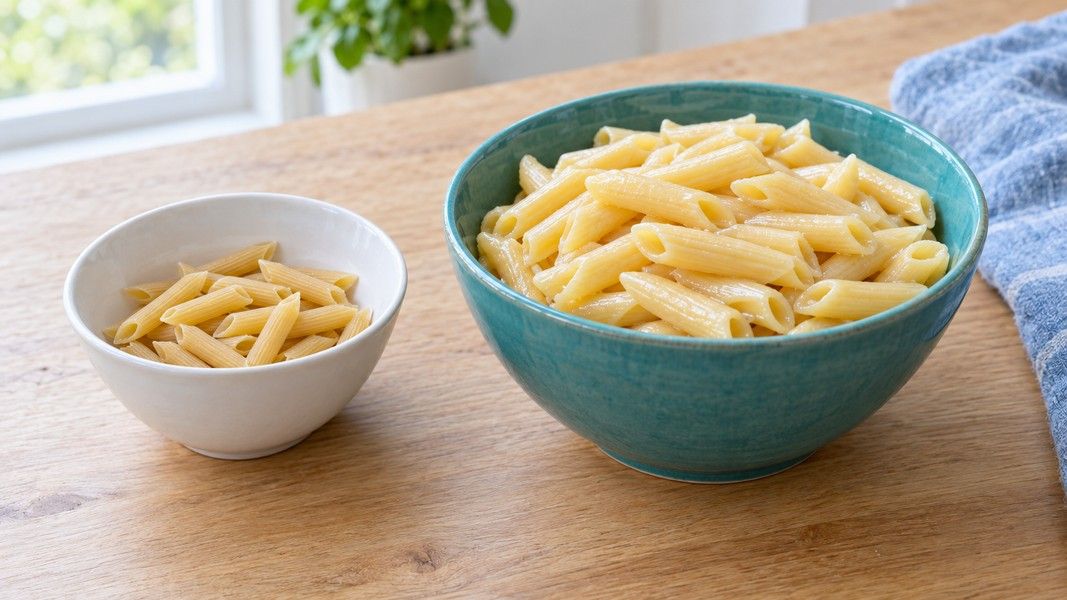
The USDA yield of 2.37 is for al dente spaghetti after 8 minutes. Boil the same pasta longer and it absorbs more water, so each 100 g of the softer pasta holds a little less pasta and fewer calories. A cooked figure per 100 g is therefore an average for a typical cooking time, and your pot may land on either side of it.
A cup measures air as well as pasta
The shape table above shows how far the cup drifts. A cup of shells and a packed cup of spaghetti differ by 46 g and 73 calories, and a heaped serving spoon or a restaurant ladle is not a cup at all.
The sauce is logged as an afterthought
Plain pasta is the easy part. The oil, butter, cream and cheese around it are where a pasta dinner's total moves most, and they are the parts people most often leave out or guess.
What Sauce, Oil and Cheese Add to Pasta
USDA reference data puts the common additions at the figures below. Each is for the amount shown, so scale them to what went on your plate.
| Addition | Amount | Calories |
|---|---|---|
| Marinara sauce, ready to serve | 1/2 cup (132 g) | 66 kcal |
| Olive oil | 1 tablespoon (13.5 g) | 119 kcal |
| Light cream | 1 tablespoon (15 g) | 29 kcal |
| Light cream | 1 cup (240 g) | 468 kcal |
| Parmesan, shredded | 1 tablespoon (5 g) | 21 kcal |
A single tablespoon of olive oil adds more calories than half a cup of tomato sauce. That is why two plates of spaghetti that look alike can sit far apart: one tossed in a spoonful of oil, the other in a thin tomato sauce.
Pesto, alfredo and carbonara vary too much by recipe and brand for one reference figure to cover them. For a jar, the label on that product is the best source. For a homemade sauce, add up the oil, butter, cream, cheese and egg that went into the pan, then divide by the number of plates it served.
A worked plate of spaghetti
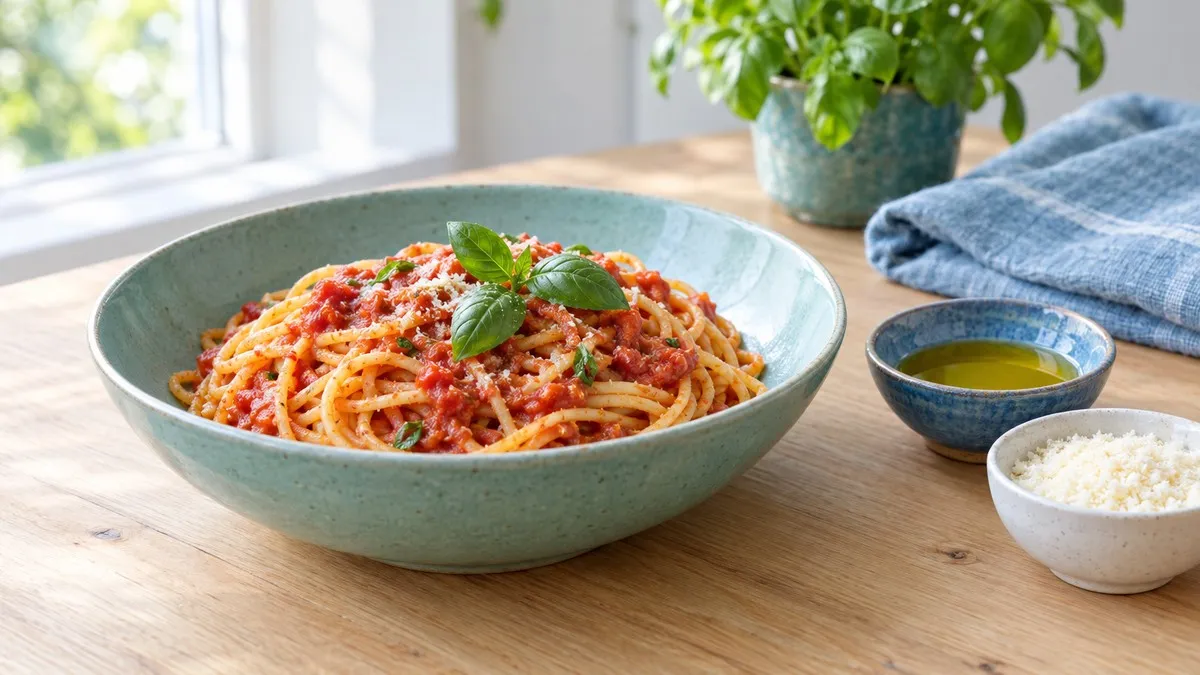
Take 180 g of cooked spaghetti, half a cup of marinara, a tablespoon of olive oil stirred through and two tablespoons of shredded parmesan on top. The pasta carries about 284 calories, the sauce 66, the oil 119 and the cheese 42, for about 511 in total.
The pasta is a little over half of that plate. Log the spaghetti alone and the diary misses nearly half of what you ate, and most of the fat.
How to Log Pasta Calories From What You Cooked
The steadiest method is to count calories from the dry pasta and divide by the cooked weight. The dry figure does not depend on how long you boiled it, so it sidesteps the water problem entirely.
Here is how it works with a kitchen scale and one pot of spaghetti:
- Measure the dry pasta in grams before it goes into the water, say 250 g. At 371 calories per 100 g, the batch carries about 928 calories.
- After draining, put all the cooked pasta on the scale, minus the weight of the bowl. Say it comes to 590 g.
- Divide: 928 calories across 590 g is about 157 calories per 100 g of this batch, so a 200 g plate is about 315 calories before the sauce.
With a scale for the dry pasta but none at the table, portion by share. If the pot carried 928 calories and you served a quarter of it, your plate holds about 232 calories of pasta. Add the sauce from the figures above, or from the totals of what went into the pan.
With no scale at all, use the cup table and be honest about the fill. A loose cup of spaghetti is about 196 calories, a packed one about 239, and a bowl from a restaurant is usually several cups. Our guide to restaurant meal calories walks through estimating a plate you did not cook.
Picking the right database entry
Read the full name of an entry before you add it. Look for "cooked" or "dry", and check the pasta type. If an entry gives about 158 calories per 100 g for plain pasta, it is cooked; if it gives about 371, it is dry. Rice works the same way, and the guide to rice calories per cup shows the matching mistakes there.
Estimating Pasta Calories From a Photo
A photo cannot see how long the pasta boiled, how much oil coated it or how tightly it sits in the bowl. Research on photo estimates points to exactly those weak spots.
A 2025 study in Current Developments in Nutrition gave 52 standardized food photos to three AI models, with the starchy part of each meal shown in small, medium and large portions. The two stronger models missed the weight by about 36 to 37 percent on average and the energy by about 36 percent. All three underestimated more as the portion grew.
A second study, whose preliminary findings were presented at the American Society for Nutrition's 2026 meeting, ran photos of 102 meals through four calorie apps. Every app underestimated, by about 250 to 345 calories per meal on average, and missed about 30 g of fat. Carbohydrates were estimated more consistently than the other macronutrients.
Both findings land on pasta. A large bowl is the portion size where estimates fall shortest, and a creamy or oily sauce is the fat a photo shows least. Plain pasta with a tomato sauce is the easier case; a big bowl of carbonara is the harder one.
Where a photo estimate helps
Primo Scale's Calorie Estimator gives estimated calories and macros for a plate or meal from one photo, drawing on USDA reference data, and shows its reasoning beside the result. That lets you check what it assumed about the portion and the sauce against what you know about the dish.
For the pasta alone, its Weight Estimator returns a typical figure and a likely range in grams, which you can multiply by the cooked figures above. Primo Scale does not weigh objects or use phone sensors. It estimates a likely range from visual analysis and reference data. If you cooked the pasta yourself, the dry-weight method above will beat any photo, and a real kitchen scale is what gives you the gram figure.
The Short Version
Plain enriched pasta has about 371 calories per 100 g dry and about 158 per 100 g cooked. The 2 oz dry serving on the box is about 211 calories, and a loose cup of cooked spaghetti about 196. Whole-wheat pasta is only slightly lower in calories, and egg noodles are lighter per 100 g but heavier per cup.
Most pasta calorie errors come from swapping dry and cooked entries, from water changing the weight, from cups that pack differently by shape, and from sauce and oil left out of the log. Counting from the dry pasta and dividing by the cooked weight avoids the first three, and adding what went into the sauce takes care of the fourth.