One cup of all-purpose flour weighs about 120 to 125 grams when you spoon it into the cup and level the top. King Arthur Baking uses 120 g, the USDA uses 125 g, and a cup dipped straight into the bag can land near 140 g. So 1 cup of flour in grams depends on two things you control: which flour you use and how it gets into the cup.
That spread is why a recipe that worked for a friend can come out dry for you. The charts below give the published figures by flour type, by cup fraction and by cup size, with the source of each number, so you can pick the right gram figure for the recipe in front of you.
How Many Grams in a Cup of Flour, in Short
For all-purpose flour, three published figures cover most recipes. The King Arthur chart lists 1 cup at 4 1/4 ounces, or 120 g. The USDA's FoodData Central entry for bleached, enriched all-purpose flour gives 1 cup as 125 g. Bob's Red Mill lists its organic unbleached all-purpose flour at 136 g a cup.
If a recipe gives cups and no grams, 125 g per cup of all-purpose flour is a sound middle figure. It sits between King Arthur's 120 g and the 128 g one home baker settled on after weighing 192 cups, and it is the figure the USDA uses for its nutrition data.
Higher figures exist too. The Los Angeles Times food section explained in 2021 that its recipes use 142 g for 1 cup of all-purpose flour, while a reader had found another publication listing 120 g. Neither is a mistake. Each assumes a different way of filling the cup, and each publication's recipes were tested with its own number.
Why the Same Cup Holds Different Weights
Flour is a powder full of air, and how much of that air stays in the cup decides the weight. Three things change it.
The first is how you fill the cup. Pushing the measuring cup into the bag presses flour against the bag's side and into the cup. Spooning or pouring it in loosely keeps more air between the particles, so the same level cup holds less.
The second is the flour itself. Bob's Red Mill explains that particle size drives the weight per cup: a coarse grind leaves gaps, so less flour fits, while a very fine grind packs tighter. Its hazelnut flour comes in at 112 g a cup and its sweet white rice flour at 160 g, the same cup holding 48 g more of the finer powder.
The third is the measuring cup. Cups sold as the same size do not always hold the same amount, which the tests in the next section picked up as well. A recipe written in cups carries all three of these variables, and grams carry none of them.
Spooned vs Scooped: How the Method Changes 1 Cup of Flour in Grams
The baker behind Cupcake Project weighed 192 cups of all-purpose flour to find out how much each habit matters, running 72 tests on each filling method across several brands and measuring cups. These are the averages:
| Method | What you do | Average for 1 cup |
|---|---|---|
| The Dip | Push the cup into the flour, then level the top | 139 g |
| The Scoop | Pour flour into the cup with a scoop, then level the top | 128 g |
Dipping gave 11 g more per cup, 8.5 percent above pouring. Over a recipe that calls for 3 cups, that gap adds up to about 33 g, roughly a quarter cup of extra flour.
The same tests compared brands, with both methods averaged. King Arthur came in at 138 g a cup, 365 Everyday Value at 136 g, Gold Medal at 130 g and Pillsbury at 129 g. The heaviest single cup was 144 g, King Arthur flour dipped, and the lightest was 124 g, Pillsbury poured. That is a 20 g spread in one kitchen, measured by one person who was trying to be consistent.
King Arthur's own 120 g figure assumes the gentlest method of all. Its recipe guide tells you to spoon dry ingredients gently into a dry measuring cup and sweep off the excess, which keeps the most air in the cup and gives the lowest weight.
Cup of Flour in Grams by Flour Type
Different flours weigh different amounts per cup, and the two big US millers do not agree with each other. This chart sets their published figures side by side. An "n/a" means we found no published figure for that flour from that miller.
| Flour | King Arthur, 1 cup | Bob's Red Mill, 1 cup |
|---|---|---|
| All-purpose | 120 g | 136 g |
| Bread flour | 120 g | 144 g |
| Self-rising | 113 g | 136 g |
| Whole wheat | 113 g | n/a |
| Unbleached cake flour | 120 g | n/a |
| '00' pizza flour | 116 g | n/a |
| Pastry flour | 106 g | n/a |
| Medium rye | 106 g | n/a |
| Spelt | 99 g | n/a |
| Almond flour | 96 g | 112 g |
Bob's Red Mill gives its bread flour and self-rising figures for the spoon-and-level method, so the gap is not simply dipping against spooning. Where both millers publish a figure, Bob's Red Mill runs 16 to 24 g higher per cup than King Arthur for the same kind of flour. If a recipe comes from one of them, use that miller's number, since that is the number its test kitchen baked with.
Why whole grain and nut flours weigh less
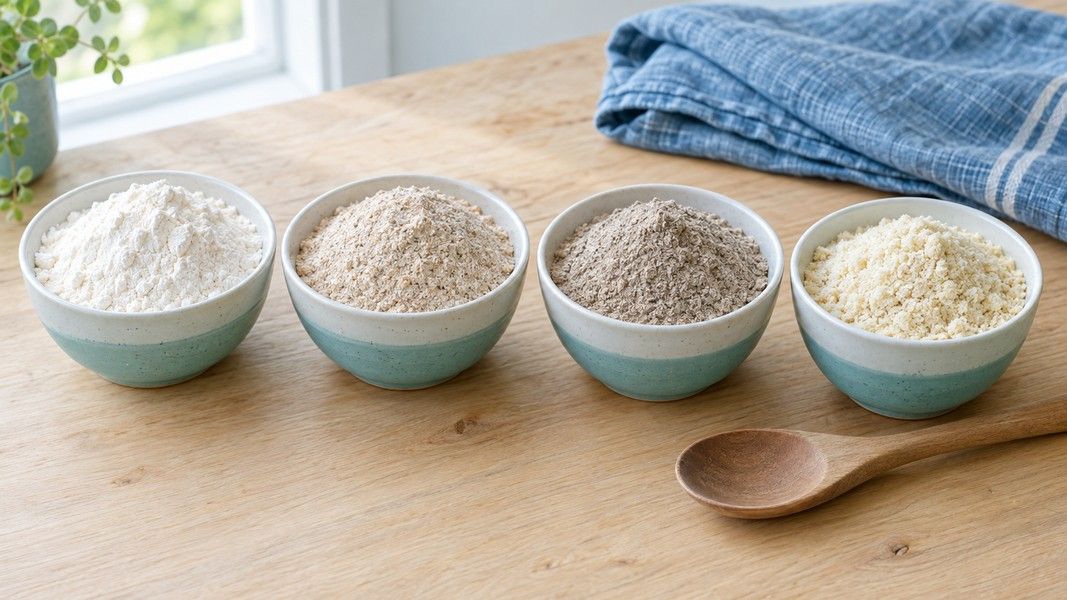
Whole grain, rye and nut flours sit at the light end. Coarser particles leave more space in the cup, as Bob's Red Mill explains, which is why King Arthur lists almond flour at 96 g against 120 g for all-purpose. Swap one for the other cup for cup and you change the weight of flour in the recipe by a fifth.
Half a Cup, a Third and Other Fractions in Grams
Most recipes do not ask for exactly one cup. This chart multiplies out the two most common all-purpose figures, King Arthur's 120 g and the USDA's 125 g, rounded to the nearest gram.
| Amount | At 120 g a cup | At 125 g a cup |
|---|---|---|
| 1/4 cup | 30 g | 31 g |
| 1/3 cup | 40 g | 42 g |
| 1/2 cup | 60 g | 63 g |
| 2/3 cup | 80 g | 83 g |
| 3/4 cup | 90 g | 94 g |
| 1 cup | 120 g | 125 g |
| 1 1/2 cups | 180 g | 188 g |
| 2 cups | 240 g | 250 g |
| 3 cups | 360 g | 375 g |
For other amounts and other ingredients, the cups to grams converter on this site does the multiplication for you.
A worked example
Say a cookie recipe asks for 2 1/4 cups of all-purpose flour and gives no grams. At 125 g a cup, that is 281 g. At King Arthur's 120 g it is 270 g. If the recipe's author dipped the cup into the bag, closer to the 139 g measured for that method, the dough they tested held about 313 g.
That is a 43 g spread for a single line of one recipe. When the cookies come out flat, try the higher figure next time; when they come out dry and crumbly, try the lower one. The number that works for a given recipe is worth writing in the margin.
US Cup vs Metric Cup: 1 Cup of Flour in Grams Outside the US
A cup is not the same size everywhere. The US customary cup is about 237 mL, while the metric cup is 250 mL, a quarter of a liter, as the NIST household measures guide sets out. Australia, New Zealand and Canada cook with the 250 mL metric cup. US nutrition labels use a third figure: the FDA defines a cup as 240 mL for labeling purposes.
The metric cup holds about 6 percent more than the US cup. Scaled by that much, a cup of all-purpose flour at 120 g in a US cup becomes about 127 g in a metric cup, and 125 g becomes about 132 g. Those are proportional estimates, not measured figures, and they assume the same flour and the same filling method.
Australian recipes add one more trap: the Australian tablespoon is 20 mL, against 15 mL in most other countries. A recipe that measures flour in tablespoons will be a third heavier per spoon when it was written in Australia.
How to Measure a Cup of Flour Without a Scale
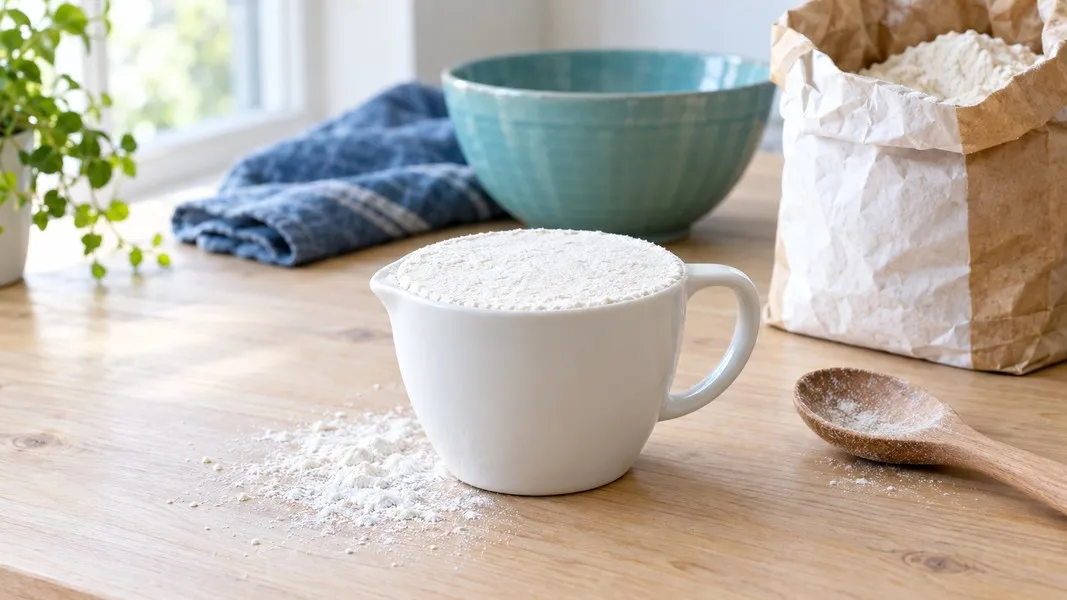
When cups are all you have, the aim is a cup filled the same way every time, matching the figure you plan to rely on. The spoon-and-level method gets you closest to the 120 to 125 g figures:
- Stir or fluff the flour in its bag or jar first, so it is loose before it goes into the cup.
- Spoon it gently into a dry measuring cup, the kind without a spout, until it heaps over the rim.
- Sweep the excess off with the back of a knife, without pressing down or tapping the cup.
Use the same cups each time, too, given that two cups of the same nominal size held different amounts in the tests above. For more ways to get close without weighing, see our guide on estimating grams without a scale.
Where a photo estimate fits
Loose flour in a cup is a hard case for any photo estimate, because a picture cannot see how tightly the flour is packed. Whole foods are a better fit for that. Primo Scale identifies an apple, a banana or an egg from one photo and gives an estimated weight as a likely range, with its reasoning shown beside the figure. Primo Scale does not weigh objects or use phone sensors. It estimates a likely range from visual analysis and reference data.
For baking, where 20 g of flour changes a dough, a real kitchen scale is what gives you grams you can repeat. The cup method above is the best stand-in until you have one.
Which Number to Use for Your Recipe
The right gram figure depends on where the recipe came from. A King Arthur recipe was developed at 120 g a cup, and a Bob's Red Mill recipe at its own higher figures. A recipe from a publication that states its cup weight, as the Los Angeles Times does with 142 g, should be followed at that weight.
For a recipe with no stated weight, 125 g a cup is the safest starting point for all-purpose flour, because it sits in the middle of the published figures. Then adjust from the result: drier than expected means less flour, spread or runny means more.
For flours other than all-purpose, use the miller's own chart where you can. Primo Scale and other photo tools are built for whole items you can see, not for loose powders, so for flour the printed charts above are the reference to trust.
The Short Version
One cup of all-purpose flour is about 120 to 125 g when spooned and levelled, and up to about 139 g on average when the cup is dipped into the bag. Published figures for the same flour run from 120 g to 142 g, and the gap comes from the filling method more than from the flour.
Flour type shifts the figure further, from 96 g for almond flour to 144 g for one miller's bread flour. A metric cup holds about 6 percent more than a US cup. When a recipe gives grams, use them; when it gives only cups, start at 125 g for all-purpose flour, measure the same way every time, and adjust from how the bake turns out.