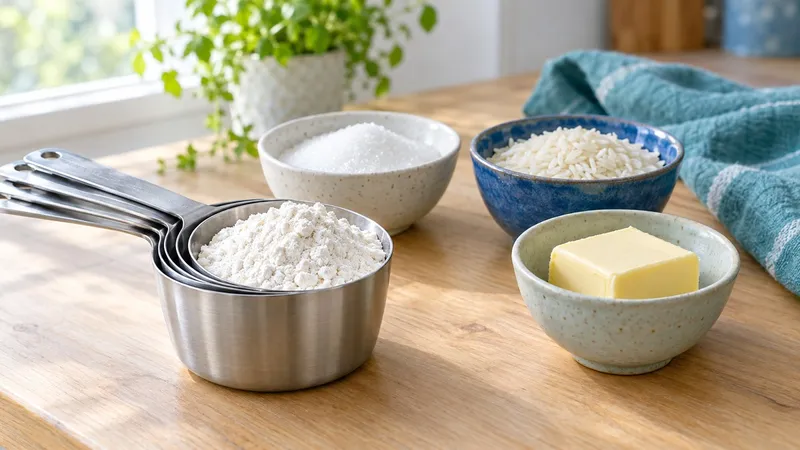
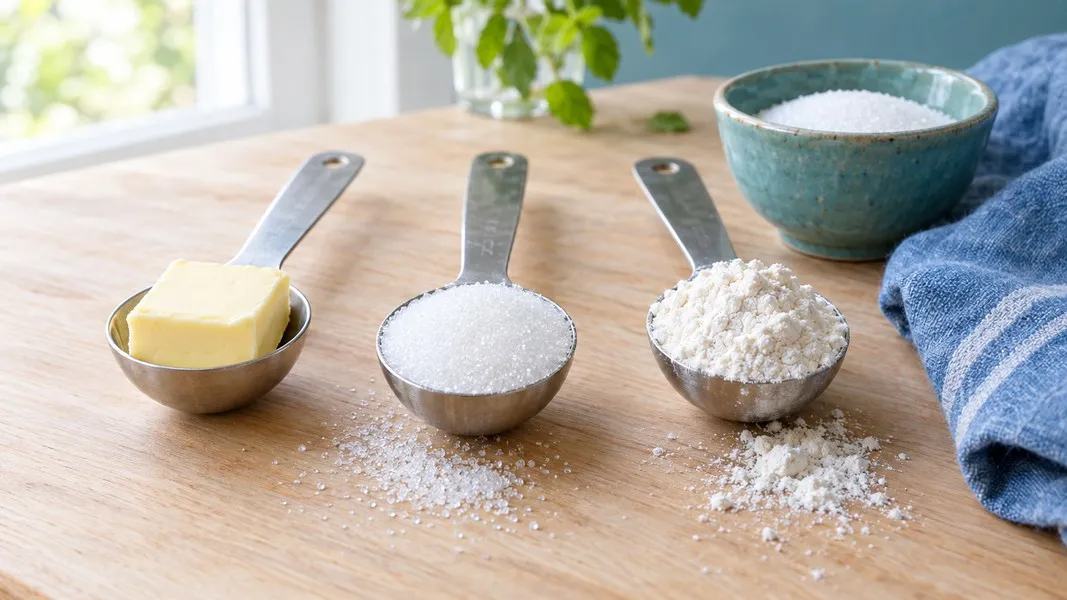
How many grams to a tablespoon depends entirely on what is in the spoon. A level US tablespoon holds about 15 mL, which comes to roughly 14.2 g of butter, 12.5 g of granulated sugar, 7.5 to 7.8 g of all-purpose flour and 18 g of table salt. The volume stays the same; the density of the ingredient decides the grams.
That is why a recipe written in grams and a drawer full of measuring spoons never line up neatly. This guide gives 1 tablespoon to grams for the ingredients people ask about most, multiples up to a full stick of butter, the reverse direction for small gram amounts, and the cases where a spoon gives you the wrong answer.
What a Tablespoon Holds in Millilitres
The NIST metric kitchen tables list one tablespoon as 15 mL and one teaspoon as 5 mL, rounded for home cooking. The exact US customary tablespoon is a little smaller, 14.79 mL, which is the figure NIST prints on its metric conversion card. Three teaspoons make a tablespoon, and sixteen tablespoons make a cup.
The UK and most of the metric world use the same 15 mL spoon. Australia is the exception: an Australian tablespoon is 20 mL, so it holds about a third more of everything. If a recipe comes from an Australian cookbook or website, multiply the figures below by about 1.35.
Every gram figure in this post is for a level US tablespoon. A heaped or rounded spoon has no standard size, so nobody can give you a reliable gram figure for one.
1 Tablespoon to Grams: The Main Chart
Two sources cover kitchen ingredients well. USDA FoodData Central publishes household measures for each food record, such as grams per cup or per tablespoon. King Arthur Baking publishes an ingredient weight chart built for bakers. Where a source lists only a cup or a half cup, the per-tablespoon figure below is that amount divided by the number of tablespoons it holds.
| Ingredient | USDA, grams per tbsp | King Arthur, grams per tbsp |
|---|---|---|
| Butter | 14.2 | 14.1 |
| Granulated sugar | 12.5 | 12.4 |
| Brown sugar, packed | 13.8 | 13.3 |
| Powdered sugar, unsifted | 7.5 | 7.1 |
| All-purpose flour | 7.8 | 7.5 |
| Cornstarch | 8.0 | 7.0 |
| Cocoa powder, unsweetened | 5.4 | 5.3 |
| Table salt | 18 | 18 |
| Honey | 21.2 | 21 |
| Maple syrup | 19.7 | 19.5 |
| Olive oil | 13.5 | 12.5 |
| Smooth peanut butter | 16.1 | 16.9 |
The two columns rarely differ by more than a gram, and where they do, the reason is usually how the ingredient went into the cup. King Arthur spoons flour into the cup and levels it, which gives a lighter cup than other methods. For everyday cooking either column works. For baking, pick one source and stay with it through the whole recipe.
Tablespoon to Grams for Butter
Butter is the most searched ingredient for this conversion, and the easiest one to get right. USDA lists 14.2 g for a tablespoon and 227 g for a cup. King Arthur lists 8 tablespoons, half a cup, as 113 g, which is the weight of a standard US stick.
| Butter | Grams |
|---|---|
| 1 tablespoon | about 14 g |
| 2 tablespoons | about 28 g |
| 3 tablespoons | about 43 g |
| 4 tablespoons (1/4 cup) | about 57 g |
| 8 tablespoons (1 stick, 1/2 cup) | about 113 g |
| 16 tablespoons (1 cup) | about 227 g |
So 3 tablespoons to grams for butter is about 43 g. In Australia butter comes as a 250 g block, and recipes there ask for it in grams, so the spoon rarely comes into it.
If you track what you eat, the same USDA record gives 102 calories for a 14 g tablespoon of unsalted butter. Butter melted into a dish is harder to account for, since nobody sees how much went in. That hidden fat is one of the reasons a photo calorie estimate of a cooked meal carries real uncertainty, whether it comes from a person or from an app such as Primo Scale.
How Many Grams of Sugar to a Tablespoon
Granulated sugar is 12.5 g per tablespoon on USDA's figure of 200 g a cup, and 12.4 g on King Arthur's 198 g a cup. Round it to 12.5 g and you will not notice the difference in any recipe.
| Granulated sugar | Grams |
|---|---|
| 1 tablespoon | 12.5 g |
| 2 tablespoons | 25 g |
| 3 tablespoons | 37.5 g |
| 4 tablespoons (1/4 cup) | 50 g |
Brown sugar is heavier by the spoon because it is packed, at 13.3 to 13.8 g. Powdered sugar is the opposite: an unsifted tablespoon is only 7.1 to 7.5 g, a little over half the granulated figure, because the fine powder sits loosely with air between the grains.
For cup amounts and the differences between white, brown and powdered sugar in more detail, the guide to grams in a cup of sugar covers each one.
Flour by the Tablespoon
All-purpose flour is light, at 7.5 g per tablespoon on King Arthur's figure and 7.8 g on USDA's. That is close to half the weight of the same spoon of sugar.
| All-purpose flour | Grams |
|---|---|
| 1 tablespoon | 7.5 to 7.8 g |
| 2 tablespoons | 15 to 15.6 g |
| 3 tablespoons | 22.5 to 23.4 g |
| 4 tablespoons (1/4 cup) | 30 to 31 g |
Flour is also the ingredient most affected by technique. A spoon dipped straight into the bag packs flour down and comes out heavier than one filled loosely and levelled with a knife. Over a single tablespoon that difference is small. Over a cup it adds up, which is why the cup of flour guide compares the methods side by side.
Cornstarch lands between 7 and 8 g per tablespoon, and unsweetened cocoa powder is the lightest common baking ingredient here, at 5.3 to 5.4 g.
Salt: Why One Tablespoon Can Be 8 g or 18 g
Salt shows the problem with spoons more clearly than anything else in the kitchen. Fine table salt is 18 g per tablespoon on both USDA's and King Arthur's figures. King Arthur lists Morton kosher salt at 16 g and Diamond Crystal kosher salt at just 8 g for the same spoon.
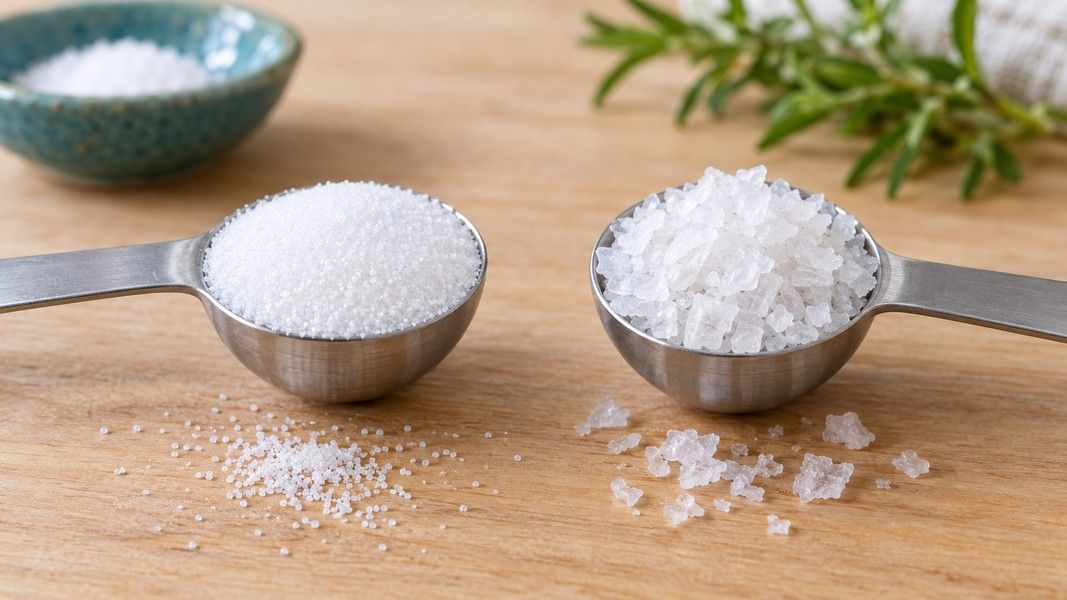
The salt is the same sodium chloride; the crystals are not. Fine cubes pack tightly, while large kosher flakes leave air gaps, so the spoon holds less salt. America's Test Kitchen measures Diamond Crystal at 10 g a tablespoon rather than 8, and its rule of thumb for swapping is 1 part table salt to 1.5 parts Morton kosher to 2 parts Diamond Crystal.
If a recipe says "1 tablespoon kosher salt" without a brand, the grams can differ by half. When the recipe gives grams, use the grams. When it gives only a spoon, start with less and taste.
Honey, Syrups and Oils
Liquids are easier because they pour level by themselves. Honey is the heaviest common one, at about 21 g per tablespoon, and maple syrup follows at 19.5 to 19.7 g. Both are denser than water, which is about 14.8 g per tablespoon on USDA's figure.
Oils go the other way. Olive oil is 12.5 to 13.5 g per tablespoon, lighter than water, because oil is less dense. Smooth peanut butter sits at 16 to 17 g, and it is the one ingredient here where a level spoon is genuinely hard to manage, since it clings to the spoon and leaves part of itself behind.
For sticky ingredients, a light coat of oil on the spoon helps the honey or syrup slide out, so the amount that reaches the bowl is closer to the amount you measured.
Teaspoons and Leaveners
A teaspoon is a third of a tablespoon, so divide any figure above by three. Table salt is 6 g per teaspoon on USDA's figure, and granulated sugar about 4.2 g.
Leaveners are where the sources disagree most, and where small differences matter most:
- Baking powder: King Arthur lists 4 g per teaspoon; USDA's figure works out to about 4.6 g.
- Baking soda: King Arthur lists 3 g per half teaspoon, about 6 g per teaspoon; USDA's figure works out to about 4.6 g.
- Instant yeast: King Arthur lists 2 1/4 teaspoons, one standard packet, at 7 g, and a full tablespoon at 9 g.
Because these amounts are so small, follow whichever unit the recipe itself uses. A recipe developed with spoons was tested with spoons, and a recipe developed in grams was tested in grams.
Grams to Tablespoons, Working Backwards
To go the other direction, divide the grams by the per-tablespoon figure for that ingredient. Take 10 grams to tablespoons as an example:
| 10 g of | Tablespoons |
|---|---|
| Butter | about 0.7 tbsp |
| Granulated sugar | 0.8 tbsp |
| All-purpose flour | about 1.3 tbsp |
| Table salt | about 0.55 tbsp, or 1 2/3 tsp |
| Honey | about 0.5 tbsp |
Fractions of a tablespoon are awkward to measure, so for anything under a tablespoon it is easier to convert to teaspoons and round to the nearest quarter. The free tablespoons to grams converter does the division in both directions for more than two dozen ingredients and names the USDA record behind each figure.
When a Spoon Is Not the Right Tool
Spoons work for small amounts of dry and liquid ingredients. They work poorly for anything that does not fit in a spoon: a chunk cut from a block of butter, a wedge of cheese, a handful of nuts, a portion of food already on the plate.
For those, Primo Scale gives a quick estimate from one photo. Its Weight Estimator identifies the food and returns a typical figure with a likely range in grams, with its reasoning shown beside the result and USDA reference data behind food estimates. Primo Scale does not weigh objects or use phone sensors. It estimates a likely range from visual analysis and reference data. When you need an exact number, for bread dough, candy or anything where a few grams change the result, a kitchen scale is the right tool.
The Short Version
A tablespoon is a fixed volume, about 15 mL in the US and most other countries and 20 mL in Australia, and the grams it holds depend on the ingredient. The figures worth remembering are about 14 g for butter, 12.5 g for granulated sugar, 7.5 to 7.8 g for all-purpose flour, 18 g for table salt and 21 g for honey.
Kosher salt is the one to watch, since a tablespoon ranges from 8 to 16 g depending on the brand. Powdered sugar and flour are light, honey and syrups are heavy, and oils weigh slightly less than water. When a recipe gives grams, follow the grams; when it gives only spoons, level each one and use the same source of conversions from start to finish.