Royal Mail small parcel sizes top out at 45 cm long, 35 cm wide and 16 cm deep, with a weight limit of 2 kg. Anything bigger or heavier is a Medium Parcel, up to 61 x 46 x 46 cm and 20 kg, and beyond that the item goes to Parcelforce. Those limits include the packaging, not just the item inside.
If you sell on Vinted, eBay or your own shop, the gap between Small and Medium is where most of the money goes. A pair of boxed trainers or a thick jumper can sit a few centimetres either side of the line, and the label you buy decides whether the buyer gets a parcel or a "Fee to Pay" card. This guide covers every size class, what a wrong label costs, and how to check a box before you print anything.
Royal Mail Small Parcel Sizes at a Glance
Royal Mail sorts UK post into formats, and each format has a fixed maximum size and weight. The figures below come from the October price guide, valid from 5 October 2026, which carries the size table on the same page as the prices.
| Format | Maximum size | Weight limit |
|---|---|---|
| Letter | 24 x 16.5 x 0.5 cm | 100 g |
| Large Letter | 35.3 x 25 x 2.5 cm | 750 g (1 kg for UK Tracked) |
| Small Parcel | 45 x 35 x 16 cm | 2 kg |
| Medium Parcel | 61 x 46 x 46 cm | 20 kg |
| Parcelforce Parcel | 1.5 m long, 3 m length and girth combined | 30 kg |
Minimum sizes and tubes
There is a floor as well as a ceiling. The Royal Mail size guide sets a minimum parcel size of 10.5 x 14.8 cm, roughly a postcard, so a tiny item still needs a box or bag at least that big.
Tubes follow their own rule. For a rolled or cylinder-shaped parcel, the length plus twice the diameter must not exceed 104 cm, and no single dimension can be longer than 90 cm. A poster tube of 80 cm with a 10 cm diameter comes to exactly 100 cm and fits.
International post uses a different set of limits, so check the international guide before you send a sale abroad.
Why the Small Parcel Limit Catches Sellers Out
Most sellers who get a surcharge did not misread the table. They measured the item instead of the parcel, or the parcel changed shape on the way to the counter.
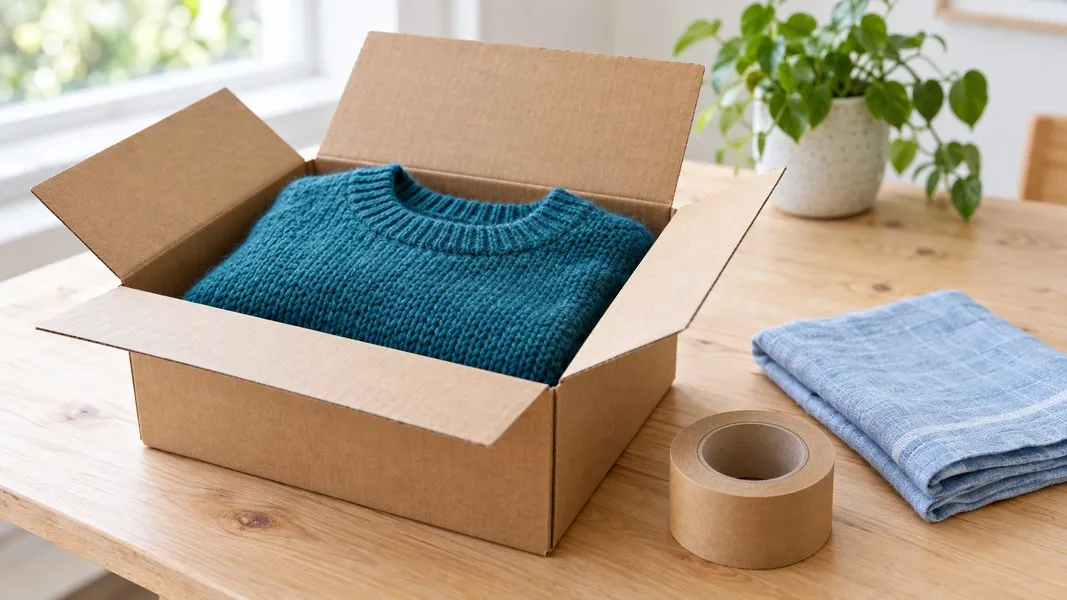
The 16 cm depth is the tightest of the three numbers. Length and width leave room for most clothing, books and small electronics, but a boxed pair of trainers, a folded winter coat or a candle in bubble wrap can push past 16 cm once it is packed. Royal Mail's own examples of a small parcel are shoes, portable speakers and mobile phones, which tells you where the line sits: small, dense items that pack flat.
Packaging is the second trap. Royal Mail measures the parcel as it arrives, including the box, padding and any bulge from overfilling. A soft mailing bag stuffed with a hoodie can be 15 cm thick on the table at home and 18 cm after it has been squashed sideways in a sack.
Weight is the third. The 2 kg Small Parcel limit is easy to pass with books, ceramics or anything glass, and a box that looks small can still need a Medium label because of what is inside it.
Royal Mail Medium Parcel Sizes and Weight Bands
The Medium Parcel covers anything up to 61 x 46 x 46 cm, which is large enough for a folded duvet, a small table lamp or a boxed games console. The size limit stays the same across the class, and the price moves with weight in three bands: up to 2 kg, up to 10 kg and up to 20 kg.
That banding matters for sellers. A light but bulky item, such as a cushion or a pair of wellies, pays the Medium 2 kg price because of its size, not its weight. A heavy but compact item, such as a 3 kg stack of paperbacks in a shoebox, pays the Medium 10 kg price even though it would fit the Small Parcel dimensions.
Royal Mail's parcels guide for business senders also notes that Tracked items larger than 45 x 35 x 16 cm may be delivered by Parcelforce Worldwide. When that happens, the recipient gets fewer notifications and no photo on delivery, which is worth knowing if you rely on that photo to settle a "not received" claim.
What About Royal Mail Large Parcel Sizes?
Royal Mail's own formats stop at the Medium Parcel. Anything beyond 61 x 46 x 46 cm or 20 kg goes through Parcelforce Worldwide, part of the same group, which the size guide lists as Parcelforce Parcels and Parcelforce Large Parcels.
Parcelforce takes parcels up to 1.5 m long, with length and girth combined up to 3 m, and up to 30 kg. A larger service handles items up to 2.5 m long and 4 m in length and girth, also up to 30 kg, though the price guide notes it is only offered at certain Post Office branches.
Girth is the distance around the parcel at its thickest point: twice the width plus twice the height. For a box of 100 x 40 x 30 cm, girth is 140 cm, and length plus girth is 240 cm, comfortably inside the 3 m limit.
What a Wrong Label Costs
When a parcel arrives with too little postage, Royal Mail delivers a "Fee to Pay" card to your buyer, not to you. The fees on its pay a fee page are set by format:
| Format | Problem | Fee to the recipient |
|---|---|---|
| Small Parcel | Insufficient postage | £3.50 |
| Small Parcel | No postage or counterfeit stamp | £7.00 |
| Medium Parcel | Underpaid | £1.50 plus the missing postage |
| Medium Parcel | Over 61 x 46 x 46 cm or 20 kg | £10.00 |
The last row is the expensive one, and the page says plainly that the measurements include any packaging.
A buyer who has to pay to collect an order starts the sale annoyed, so the real cost can be higher than the fee. On Vinted the rules depend on who chose the size. The Vinted parcel size limits page says that if Vinted selected the size automatically and Royal Mail charged extra, it may compensate you; if you picked the wrong size yourself, it usually cannot. Vinted's help pages add that once a buyer has checked out, the parcel size and carrier can no longer be changed.
Small versus Medium in pounds
The step from Small to Medium is not trivial. These are Royal Mail's online prices from 5 October 2026, before any marketplace discount:
| Service | Small Parcel, 2 kg | Medium Parcel, 2 kg |
|---|---|---|
| 2nd Class | £4.40 | £7.00 |
| 1st Class | £5.70 | £8.20 |
| Tracked 48 | £3.75 | £5.70 |
On a £10 sale, the difference of about £2 to £2.60 is a large share of the margin, which is why getting a parcel under 16 cm deep is worth a few minutes of repacking.
How to Measure a Parcel Without a Tape Measure
Royal Mail's guide on measuring a parcel recommends a ruler or soft tape, then suggests household objects when neither is around. Sheets of paper work well because their sizes are standard: A4 is 21 x 29.7 cm and A3 is 29.7 x 42 cm. A fizzy drink can is about 11.5 cm tall, a biro about 14.5 cm and a wine bottle about 30 cm.
The paper trick is the fastest check for the Small Parcel limit. A parcel that fits under an A3 sheet laid on top is inside the 45 x 35 cm length and width, with about 3 cm to spare on the length and 5 cm on the width. The depth is the one to measure carefully, and a can of drink stood beside the box gives you 11.5 of the 16 cm at a glance.
For more ways to read a box with what is already in the house, see our guide on measuring a box without tools.
Estimating size from a photo
A photo is another quick first check. Primo Scale's Size Estimator identifies the box in one photo and returns an estimated width, height and depth, with its reasoning shown beside the result, and on iPhones that have LiDAR it uses that depth data as well. That is often enough for a first read on whether a parcel is clearly Small or clearly Medium, before you pay for a label.
For a borderline box, a tape measure is still the answer, because the limits are hard edges. The same goes for the 2 kg line: Primo Scale can give a rough size and weight estimate before posting. Primo Scale does not weigh objects or use phone sensors. It estimates a likely range from visual analysis and reference data. When a parcel is near 2 kg, an exact weight needs a real scale, such as a kitchen or luggage scale, or the one at the Post Office counter.
A Worked Example: Three Items, Three Labels
Say you have three sales to post on the same afternoon.
The first is a cotton T-shirt. Folded tightly into a mailing bag, it measures about 30 x 22 x 3 cm and weighs well under a kilo. It is too thick for a Large Letter, which stops at 2.5 cm, so it goes as a Small Parcel. Pressing it flatter to under 2.5 cm would make it a Large Letter, the cheapest option, but only if it stays that thin.
The second is a pair of trainers in their original box. Boxed, they come to about 34 x 22 x 13 cm, and with a layer of bubble wrap and an outer mailing box the parcel reaches 36 x 24 x 17 cm. That 17 cm depth makes it a Medium Parcel. Shipping the trainers in a snug mailing bag without the shoe box, if the listing allows it, brings the depth back under 16 cm.
The third is a small table lamp, 45 cm tall once the shade is on. Even with the shade packed beside the base, the parcel is far deeper than 16 cm, so it is a Medium Parcel from the start, and the only question is which weight band it falls in.
None of this matters to the centimetre until an item sits near a limit. A parcel moves up a class as soon as any one dimension or its weight breaks a limit, so check depth first, then length, then width.
When the dimensions do not decide it
Some items are close on size and far from the line on weight, or the reverse. A 1.9 kg box of books that is 30 x 20 x 15 cm is a Small Parcel today and a Medium Parcel if you add one more paperback. When the weight is the deciding factor, weigh the packed parcel, not the contents.
Getting the Size Right Before You List
The cheapest moment to fix a parcel size is before the buyer pays, because on most marketplaces the size is locked at checkout. Three habits cover almost every case:
- Pack the item in the packaging you will actually post, then measure the packed parcel, not the item.
- Check depth against 16 cm first, since it is the limit sellers pass most often, then length and width.
- If the parcel is within a centimetre or two of a limit, or close to 2 kg, choose the larger class or repack it smaller.
Royal Mail retail prices are set by format and weight band, so unlike the volume-based pricing some US carriers use, there is no formula to apply. If you also ship with UPS, FedEx or DHL, our guide to dimensional weight calculation covers how those carriers price a box.
The Short Version
A Royal Mail Small Parcel can be up to 45 x 35 x 16 cm and 2 kg, packaging included. A Medium Parcel goes up to 61 x 46 x 46 cm and 20 kg, priced in bands at 2, 10 and 20 kg, and anything larger goes to Parcelforce, up to 1.5 m long and 30 kg.
The depth limit of 16 cm is the one most likely to push a parcel into the next class, and underpaid postage turns into a fee your buyer pays: £3.50 for a Small Parcel, and £10 for a Medium Parcel over its size or weight limit. Measure the packed parcel, check depth first, and leave a margin when an item sits near a limit.